Tag Archives: iO

A Little More


Stripes.

Ghostbusters.

Animal House.

Caddyshack.

National Lampoon’s Vacation.

Groundhog Day.

Anybody who made even one of those legendary comedies could be proud. Harold Ramis made all of them.

Image

But even more importantly, he did it by being kind. Open. Generous. Amazingly accessible. And a truly decent human being.

Image

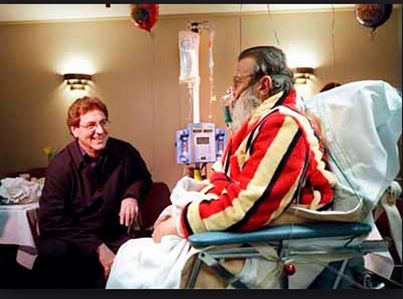
When I was at the iO Chicago last week, I noticed this picture of Harold and Del Close at Del’s “living wake” hanging in the office, and thought about how, although Del was gone, at least Harold was still with us. Sadly, that’s no longer correct.

The internet is currently filled with people saying what a fine man Harold Ramis was. Believe me, they’re all true.

Improv Mafia

I spent Saturday afternoon workshopping the Improv Mafia, the improv group at Illinois State University, an old dog trying to teach these kids some new tricks. Fortunately, everything old is new again, eventually, and I kept remembering tricks and exercises from many years ago that seemed to work pretty well. I also, in the spirit of Del Close, made up a few exercises that I though would be beneficial to them (though we only had time to work on a couple of them–time flies when you’re improvising).

Image

Next Saturday are the finals for the College Improv Tournament, which is organized by my old pal Jonathan Pitts (here’s the info). The top 16 college improv teams in the U.S. will be competing for the national championship in Chicago. These are the regional champions who have advanced from the over 100 teams that competed across the country.

Many years ago, Del and Charna Halpern organized what may have been the first college improv tournament. If I remember correctly, there were three teams competing–the Yale Purple Crayon, and two Chicago-area teams. And now, there are hundreds of college teams alone, competing for a real national championship for the seventh year in a row. 

Good luck to all the improvisers. And if the Improv Mafia wins, and I try to claim as much credit as possible, just ignore me.

Image

iO Python Process Class Part 2

The final session of my first iO writing class wrapped up last night with a staged reading of a half-hour show we cobbled together from the various sketches the students have been writing and co-writing in the same process that the Pythons used to put together their shows. It went even better than I had hoped, especially considering the degree of difficulty involved.

It occurred to me that we managed to do in four three-hour sessions what would normally require twice as many sessions. But despite the breakneck pace, they acquitted themselves very well. Although it would have been nice to have a bit more time for polish, they were amazing, especially considering that four weeks ago, none of them knew each other, but managed to collaborate enough to produce a half-hour program.

But even the short schedule, I think, was beneficial. As I told them last night, most writers have virtually their whole life to come up with and polish their first portfolio of sketches or their first TV spec script. But if they get hired, they often have one week to produce their second one. There’s not a lot of ways to train for that. Hopefully, my students are a little better equipped than they were four weeks ago.

We even had time to watch the very first episode ever filmed of Monty Python’s Flying Circus, to give them some ideas about sequencing sketches, so I decided to post one that got a lot of laughs. Enjoy.

iO Python Process class

Tonight is the final session of my iO Chicago Python Process class. I’m going to miss this a lot! The group is busily polishing sketches and tonight we’ll decide on a running order and do a reading with a few invited guests. If my students are having as much fun as I am, I’m going to have to organize another one of these very soon.

We’ve been watching videos, writing, and discussing re-writes and they’ve been learning collaboration a la Python. I’ll let you know how it goes.

An iO Python Winter

If you live in the American Midwest and you have any sense, you probably stayed someplace warm Monday night and didn’t bother to venture out in the sub-zero temperatures.

But the dozen brave souls who were students in my Python Process writing class at the iO Chicago and I had a more interesting time.

You see, when I started teaching this class, the idea was to use the Monty Python writing process (and showing them a lot of Python-related film clips and talking about my own personal experiences) as a sneaky way to teach them about re-writing and collaborating.

I thought about postponing Monday night’s class, but when I heard that one of the students was driving in–from Michigan, no less–I figured I’d better give it a go. And in fact, the interstate roads were mostly dry and clear, and the trip was surprisingly easy.

And I was glad I did. What started as a group that liked watching Python clips, is doing some terrific writing work, producing some very funny material, and making it better by allowing other groups of students to re-work it. It’s a great group, although I’m not sure why I’m surprised that Python fans would make good sketch writers. And now, my only regret is that it’s just a four-week class, and it’ll be over just as they’re hitting their stride.


Early Pre-Python

This is one of the sketches I may be showing my iO class in the coming weeks. Known variously as “The History of Slapstick,” “The History of the Joke,” “The Custard Pie Sketch,” and probably by a few other names as well, this is probably the oldest sketch that ever made it into any of the Monty Python shows (the runner-up: probably “Four Yorkshiremen”). Written by Terry Jones and, I think, Michael Palin, long before the Pythons ever got together, it was eventually incorporated into the Python stage show, in part because the Pythons wanted to include some sketches that most of their fans hadn’t seen before. We’ll find out in July if they will include it in the O2 shows…
This version is from one of the Amnesty International Benefits. Enjoy.

Meaning of Creosote

Here’s another clip I’m using for my iO Chicago writing class (see yesterday). This is a classic, but is also NSFD (not safe for dinner) viewing.
At a workshop I conducted a while back, I asked Terry Jones about the writing of this scene. He revealed that it initially got an unenthusiastic response from the other Pythons, so he put it away. Then, about a month later, John Cleese rang him up and told him that he thought it could be very funny. As Terry put it, “John discovered that the waiter gets all the laughs!”
Enjoy.

How to Irritate People

Before John Cleese and Graham Chapman wrote the Dead Parrot sketch, they wrote this sketch for a special called “How to Irritate People.” When they started doing Monty Python, Graham Chapman suggested substituting a parrot instead of a car, and the rest is history. But here’s what the original sketch was like.
I’ll be showing this sketch at a writing workshop I’m conducting this week at the iO Theatre in Chicago, and thought I’d give you a peek. Enjoy.

Farley

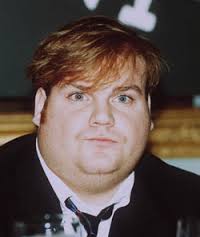
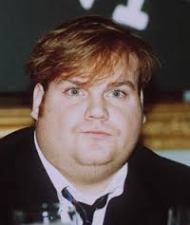
It’s hard to imagine what a 49-year-old Chris Farley would be doing right now. Movies, of course. Naturally, SNL would have wanted to bring him back as their Toronto Mayor Rob Ford. So many things… But we’ll never know, because we lost Chris on this date in 1997. It’s hard to believe he’s been gone 16 years, despite the best efforts of so many friends who tried to help him. 
Image

My own favorite memories of him were when we were both part of the whole Chicago improv scene in the late ’80s, when everyone knew each other, closed the neighborhood bars after the shows, and crashed at each others’ places. It was an amazing scene, one that hasn’t been written about much yet, but eventually will be. (How could it not, with the talent that went through during that era?)

We had all heard about this kid from Wisconsin, the one that idolized Belushi and wanted to study with Belushi’s favorite director, but we hadn’t seen him perform. He had started taking classes with Del and Charna, but they kept insisting that he wasn’t ready to perform yet. Of course, this only made him want it all the more. Finally, they decided he was ready. I seem to recall that Del tipped some of us off, that we might want to catch this kid and his first time on a Chicago stage. Del did NOT say this sort of thing, ever, so when he told us that night, we made a point of watching.

I think we later came to accept the metaphor: Farley attacked the stage, with an intensity that blew us away. His was raw and unpolished talent, but he blew us away. Del later told him “You’re like one of those guys that the Vikings used to strap to the prow of their ships when they’re going into battle.” And he was right.

Of course, the more he studied, the more disciplined and professional he became, but I’ll never forget that first night. Miss you, Chris.

Sellout

As I write this, there are only two more spots open in my Python Process writing class at the iO Chicago. This is the one I warned you about here. This sold out almost as quickly as the Python reunion shows! If you missed out this time, cross fingers, and maybe we can offer it again soon.

If you were able to sign up for it, I’ll see you in January. This should be fun!