Tag Archives: Del Close

More Del


Image

I’ve been thinking about Del Close a lot recently. This was the week he died back in 1999, and also the week he was born (in 1934). Also, ironically, this is the time of year that some of his prominent students passed away as well, students like John Belushi, John Candy, and, now, Harold Ramis.

But I’d rather dwell on his life and what he accomplished while he was with us. One of his accomplishments was a role in Ferris Buehler’s Day Off, where he portrayed Mia Sara’s teacher. The day he filmed this, he showed up at Crosscurrents, where we were then taking classes and performing The Harold, and told us about his day. He also told us “I snuck in a little commercial for us, in John Hughes’ big blockbuster comedy.” And he told us where to look for it when the film came out.

Sure enough, we were still performing Harolds about a year later when the movie opened. And, just as Del had promised, if you look on the blackboard, he left us a little commercial just above the word “prison.”


Happy Birthday Del

Image

 It was 80 years ago, March 9, 1934, that Del Close was born in Manhattan, Kansas. During the nearly 65 years he was with us, he taught us, directed us, appalled and entertained us, amazed and enraged us, enlightened us, and, most of all, made the world a better place for his having been here.

Del could be a walking contradiction, capable of surprising even those closest to him. He was a contrarian, a philosophy that informed much of his work and his life. He was also one of the few true geniuses I’ve ever known, with the ability to process information and observations and present them in new ways.

His life story has taken on legendary proportions, in part because Del believed that legends were often more truthful than facts. He was traveled the country with Dr. Dracula’s Den of Living Nightmares, knew L. Ron Hubbard before Scientology, appeared in The Blob remake, cavorted with the Merry Pranksters, used aversion therapy to recover from alcoholism, kicked a cocaine habit with the help of a coven of witches, became a very talented stage and film actor, helped to develop and became the greatest champion of long form improvisation, and bequeathed his skull to the Goodman Theatre for their productions of Hamlet.

Del directed John Belushi, Bill Murray, Harold Ramis, John Candy, Chris Farley, Tina Fey, Mike Myers, Amy Poehler, Stephen Colbert, and many others. He was co-creator of the Harold, director for Second City, San Francisco’s The Committee, and the ImprovOlympic (now iO), and “house metaphysician” for Saturday Night Live. His students went on to found the Groundlings in Los Angeles, the Upright Citizens Brigade in both New York and Los Angeles, and the Annoyance Theatre in Chicago.

I researched all the claims and rumors about his life while I was writing his biography The Funniest One in the Room. And although I discovered were some exaggerations and fictions, I learned that the most unbelievable stories were the true ones.

His ashes, along with a few photos and other memorabilia, are on display at the iO Chicago, and I’m sure he’ll be making the move when the iO moves to a new building later this year. Stop by and say hello. Del would like that.

The Funniest One in the Room…

And even though that’s also the title of my book, it’s a particularly appropriate day to recycle it.

ImageIt was 15 years ago today, March 4, 1999, that Del Close left us. His official last words: “I’m tired of being the funniest one in the room.”

He was just five days short of his 65th birthday, way too young to leave us without imparting more of his improvisational wisdom, and sharing his genius with yet another generation of performers.

Of course, Del never thought he would live anywhere near as long as he did, and anyone who knew him in the 1950s, 60s, and 70s might agree. (Much later in life, he encountered one of his cronies from that period, and began rattling off his list of performing and directing accomplishments. The man gasped “My God, Del–you’ve gone sane!”)

He left behind a legacy that anyone would envy.

The Improv Olympic, now the iO, turns out hundreds of students every year, thanks to Charna carrying on his dream of “Theatre of the Heart.” Whether they know it or not, everyone that climbs on a stage and improvises today probably owes a debt of gratitude to Del. His students are on stage, screen, and television, and establish their own theatres across the country and around the world. And for those of us who knew him and were lucky enough to be his friend, he left us with memories. 

The Harold


Beginning improvisers often assume that The Harold, the long form improvisation developed at The Committee and refined by Del Close in Chicago, was named for Harold Ramis.

Image

I point out that it isn’t true, and The Committee was performing Harolds before Harold Ramis joined Second City (the detailed story is in my Del biography The Funniest One in the Room).

But maybe it should be. And that’s the way I’m going to start thinking of it.

A Little More


Stripes.

Ghostbusters.

Animal House.

Caddyshack.

National Lampoon’s Vacation.

Groundhog Day.

Anybody who made even one of those legendary comedies could be proud. Harold Ramis made all of them.

Image

But even more importantly, he did it by being kind. Open. Generous. Amazingly accessible. And a truly decent human being.

Image

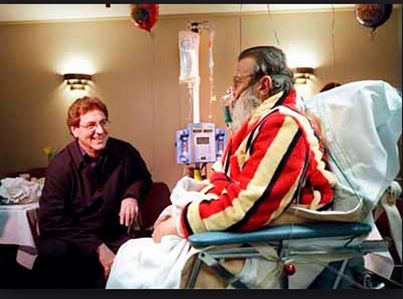
When I was at the iO Chicago last week, I noticed this picture of Harold and Del Close at Del’s “living wake” hanging in the office, and thought about how, although Del was gone, at least Harold was still with us. Sadly, that’s no longer correct.

The internet is currently filled with people saying what a fine man Harold Ramis was. Believe me, they’re all true.

Snapshots of Harold

A few years ago, one of the classic Second City casts was going to reunite for a one-night-only performance. I asked a few of them about doing an article about the reunion, but a couple of them were reluctant. Harold Ramis was not one of them. I asked whether he thought there was a fear of failure after being off-stage for so long, but he assured me that wasn’t the case, at least with him. “I’ve failed way too many times,” he told me with a laugh. “I’m failed on a national level. I’ve failed on a worldwide level!”

We both laughed that day. I thought about reassuring him of his many successes, but I knew it wasn’t necessary. He already knew about them, and besides, the failures were funnier.

The list of Harold Ramis’s professional successes is long and well-known. It’s worth noting, however, what an all-around great guy he was personally; if he could do anything for you, he would. 

I certainly did not know him well, although our paths crossed a few times. I interviewed him for STARLOG magazine (when he directed Multiplicity–one of his lesser efforts). He helped me when I was writing The Funniest One in the Room (my Del Close biography).

He was in the midst of his publicity tour, promoting Analyze This!, when he got word that his director and friend Del Close was dying. He immediately flew back to Chicago and attended the now-famous “living wake” for Del the night before Del passed away. A very classy guy.

ImageAnd at the Second City 50th Anniversary in 2009, he gladly posed for a photo with my Ghostbusters-loving son.

I didn’t know he was ill, but I was very happy to hear that Bill Murray had been by to visit. The two of them had been estranged for many years, but it’s nice to know that they managed to put it aside when it counted the most.

And it should also be noted that Harold was a Chicago guy (admittedly, by way of the North Shore). But when he became successful, he didn’t pack up and move to L.A. Instead, he kept an office and a home in Chicago.

This is a huge loss to comedy, to Chicago, and to everyone that was ever lucky enough to know him. Rest in peace, Harold.

Improv Mafia

I spent Saturday afternoon workshopping the Improv Mafia, the improv group at Illinois State University, an old dog trying to teach these kids some new tricks. Fortunately, everything old is new again, eventually, and I kept remembering tricks and exercises from many years ago that seemed to work pretty well. I also, in the spirit of Del Close, made up a few exercises that I though would be beneficial to them (though we only had time to work on a couple of them–time flies when you’re improvising).

Image

Next Saturday are the finals for the College Improv Tournament, which is organized by my old pal Jonathan Pitts (here’s the info). The top 16 college improv teams in the U.S. will be competing for the national championship in Chicago. These are the regional champions who have advanced from the over 100 teams that competed across the country.

Many years ago, Del and Charna Halpern organized what may have been the first college improv tournament. If I remember correctly, there were three teams competing–the Yale Purple Crayon, and two Chicago-area teams. And now, there are hundreds of college teams alone, competing for a real national championship for the seventh year in a row. 

Good luck to all the improvisers. And if the Improv Mafia wins, and I try to claim as much credit as possible, just ignore me.

Image

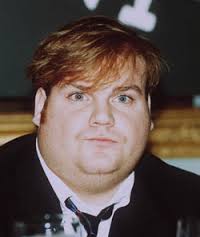
Farley

It’s hard to imagine what a 49-year-old Chris Farley would be doing right now. Movies, of course. Naturally, SNL would have wanted to bring him back as their Toronto Mayor Rob Ford. So many things… But we’ll never know, because we lost Chris on this date in 1997. It’s hard to believe he’s been gone 16 years, despite the best efforts of so many friends who tried to help him. 

Image

My own favorite memories of him were when we were both part of the whole Chicago improv scene in the late ’80s, when everyone knew each other, closed the neighborhood bars after the shows, and crashed at each others’ places. It was an amazing scene, one that hasn’t been written about much yet, but eventually will be. (How could it not, with the talent that went through during that era?)

We had all heard about this kid from Wisconsin, the one that idolized Belushi and wanted to study with Belushi’s favorite director, but we hadn’t seen him perform. He had started taking classes with Del and Charna, but they kept insisting that he wasn’t ready to perform yet. Of course, this only made him want it all the more. Finally, they decided he was ready. I seem to recall that Del tipped some of us off, that we might want to catch this kid and his first time on a Chicago stage. Del did NOT say this sort of thing, ever, so when he told us that night, we made a point of watching.

I think we later came to accept the metaphor: Farley attacked the stage, with an intensity that blew us away. His was raw and unpolished talent, but he blew us away. Del later told him “You’re like one of those guys that the Vikings used to strap to the prow of their ships when they’re going into battle.” And he was right.

Of course, the more he studied, the more disciplined and professional he became, but I’ll never forget that first night. Miss you, Chris.

Committee Report

Before the Python reunion floodgates were opened a couple of weeks ago, I mentioned that I was working on a book on The Committee, the legendary San Francisco Improvisational Theatre. It’s a fascinating story about a theatre that should be remembered and celebrated, if only for a couple of reasons.

First of all, it was Ground Zero for the San Francisco counter-culture during the ’60s, and the San Francisco counter-culture was, arguably, Ground Zero for what we all know today as the ’60s. As one of them put it, “The Sixties walked through our door.” If you hung out in San Francisco at all during that era and had any interest in the music scene or counter-cultural events, you likely spent a little time at The Committee. And if you did, you may have rubbed elbows with Lenny Bruce, or the Byrds, or the Jefferson Airplane. Because none of the hotels he stayed at had a piano, Bob Dylan used to stop by in the afternoons to practice playing piano. The Grateful Dead played their first gig there, when they were known as The Warlocks.

And that only scratches the surface, and doesn’t delve into any of the political figures or the social events of that time.

The second reason that improvisers today ought to remember it is because The Committee gave birth to The Harold and longform improvisation. There’s a lot of misinformation out there, but I was able to track down the real story and speak to many of those involved. The details are in my book The Funniest One in the Room: the Lives and Legends of Del Close. The Committee made a couple of attempts at a longer montage format, but it was after Alan Myerson, Del Close, and Bill Mathieu, conducting separate workshops, got together and compared notes, that they began working with The Committee members to develop what they later named The Harold.

There’s a lot more to the story, of course. Del brought The Harold back to Chicago with him and the world of improvisation was never the same–but it all started at The Committee.

I mention this not because my own book on The Committee is finished (don’t I wish), but because there is also another Committee project under way. Jamie Wright and Sam Shaw, who do a terrific job running the San Francisco Improv Fest, are working on a documentary film telling the story of The Committee as this, their 50th anniversary year, draws to a close. They’re interviewing as many folks as they can for this very worthwhile project, and they ran a successful Kickstarter campaign not long ago. Even though that has ended, I’m sure they wouldn’t mind if other folks decided to support them as well. Their Facebook page is here, and you can learn lots more about it. BTW, we’re not competing with my book. We’re working together and pooling resources so that they can turn out the best film, and I can turn out the best book possible about The Committee. Not because we owe them–but because they’ve earned it.

I’m in the middle of writing a longtime project that will pay tribute to The Committee, the legendary San Francisco improvisational theatre. (More about this later. A LOT more.)

Some of the members that I’ve interviewed have been quick to correct me, ever so gently, when I use the word “improv.” So much so that they’ve pretty well trained me not to use it (at least in front of them), and so I’m always careful to say “improvisation” around any of them. Hey, I figure they’ve earned the right to call it what they want. After all, that’s where The Harold was developed and named.

One of the guys I talked to this week preferred the term “improvisational theatre,” at least for what they were doing in the 1960s. He discussed the development of what they were doing as developing and polishing scenes which would be repeated every night, and were good enough to be transcribed and published, which has always been Second City’s bread and butter. He differentiated it from iO shows, for example, in that scenes performed during a Harold at the iO were forgotten immediately after and never performed again. (Fireworks, as Del Close always described them.) And, I realized that it was another example of the Del Close/Bernie Sahlins argument–whether improvisation was an art form in itself, or just a tool for developing scenes.

Del used to say we should be able to perform at such a high level that we could improvise in the evening, transcribe it overnight, and send it off to Samuel French to be published in the morning.

Have longform scenes been transcribed in that way? If not, is it because the quality or longevity isn’t there? Or because no one has bothered? He seemed to feel it was the former, but I offered up T.J. and Dave as an example of the quality that he was referring to. He hadn’t seen them, so it pretty much ended our disagreement.

But how about it? Is there an example of this that I wasn’t aware of?